

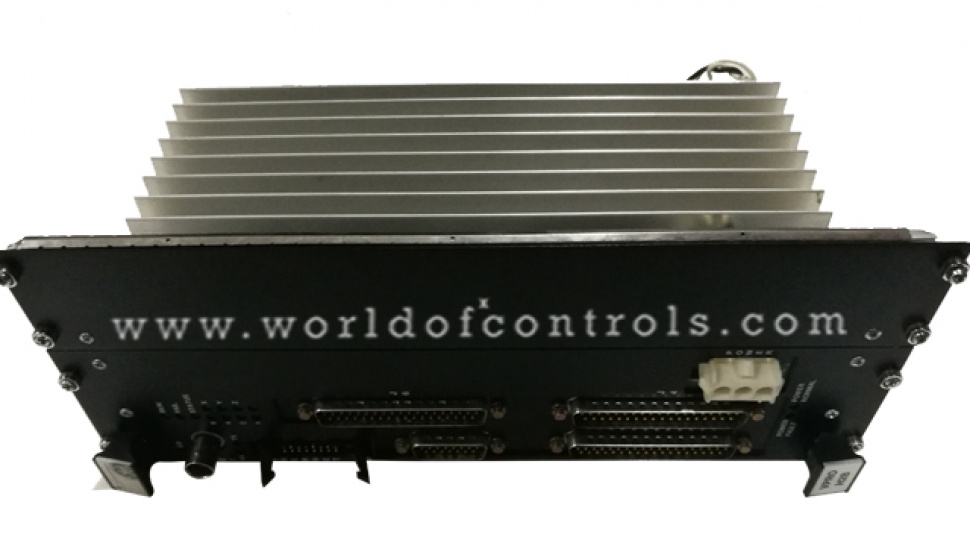

Industrial control systems depend on reliable electrical power to operate processors, I/O modules, communication interfaces, sensors, relays, and other electronic circuitry. Even when the primary power supply is functioning correctly, poor distribution of that power can create instability throughout the control architecture.
An optional power distribution daughterboard provides a dedicated hardware layer for organizing and distributing electrical power within a modular control-system assembly. By supporting structured board-to-board power routing, this type of component can simplify system architecture while helping connected electronics receive the required power through the intended distribution path.
For facilities maintaining GE industrial control equipment, understanding the role of an optional power distribution daughterboard can help maintenance teams make better decisions about system configuration, troubleshooting, replacement, and spare-parts planning.
Understanding the Optional Power Distribution Daughterboard
A daughterboard is a secondary printed circuit board designed to connect to or work alongside a primary board or assembly. Rather than functioning as a completely independent control system, it typically expands, modifies, or supports the capabilities of the main hardware.
An optional power distribution daughterboard is specifically concerned with the distribution of electrical power.
This modular approach can be useful in industrial control systems because different applications may require different hardware configurations. Instead of redesigning an entire control assembly, manufacturers can use additional boards to provide application-specific functionality.
The board's role should therefore be understood within the complete equipment architecture. Its electrical connections, supported power paths, physical interface, and system application all need to be verified before installation.
The Role of Power Distribution in Industrial Control Systems
Power distribution is one of the fundamental elements of control-system design.
A typical industrial control architecture can contain:
Processors
Input/output modules
Communication interfaces
Sensors
Actuators
Relay circuits
Signal-conditioning hardware
Human-machine interfaces
Protection circuits
Each of these elements depends on appropriate electrical power.
If power is improperly distributed, a system may experience intermittent resets, communication problems, incorrect I/O behavior, processor faults, or complete loss of functionality.
For this reason, power distribution should not be viewed simply as a wiring task. It is part of the overall electrical architecture of the control system.
A dedicated distribution board can provide an organized method for routing power between the required assemblies.
Key Functional Characteristics
The optional power distribution daughterboard is designed as a modular board-level component rather than a standalone control system.
Several characteristics are important when evaluating this type of hardware.
Daughterboard Configuration
Its daughterboard architecture allows it to operate alongside another board or assembly.
This configuration can provide additional power-distribution functionality without requiring a completely separate cabinet-level assembly.
Board-to-Board Connectivity
Daughterboards typically rely on defined electrical and mechanical interfaces with the associated primary assembly.
Correct mating and connector alignment are therefore essential.
Modular Power Architecture
A dedicated power-distribution board can support a modular architecture in which power is routed through defined paths to the required circuitry.
This can make complex control assemblies easier to organize and maintain.
Hardware Compatibility
Not every daughterboard is interchangeable with every primary board.
The correct part number, revision, mating assembly, connector arrangement, electrical ratings, and application should therefore be verified before procurement.
How a Power Distribution Daughterboard Improves System Reliability
Organized Power Distribution
A dedicated distribution board can provide a structured route for electrical power.
Instead of relying on numerous independent wiring connections, power can be distributed through defined board-level pathways. This can make the overall architecture easier to understand and maintain.
A more organized power path can also simplify troubleshooting when maintenance personnel need to trace an electrical supply from its source to a connected module.
Reduced Wiring Complexity
Industrial control cabinets can contain substantial amounts of wiring.
Board-level power distribution can reduce some of the external wiring required between associated assemblies. Fewer external connections can make installation and maintenance more manageable, although the actual reduction depends on the system design.
Support for Modular Architecture
Modern industrial control systems frequently use modular hardware.
A modular architecture allows system designers to select different combinations of processors, I/O, communication, interface, and power-related hardware according to application requirements.
An optional daughterboard fits naturally into this approach because additional functionality can be incorporated without replacing the entire primary assembly.
Easier Maintenance
Modular components can simplify maintenance when a specific hardware function needs to be inspected or replaced.
Instead of troubleshooting every power connection individually, technicians can evaluate the relevant distribution assembly and its associated interfaces.
This does not eliminate the need for system-level troubleshooting, but it can provide a more structured starting point.
Support for Connected Electronics
Stable power is essential for sensitive electronic equipment.
Processors, communication modules, and I/O electronics can respond poorly to unstable or interrupted power. A correctly designed and maintained distribution path helps ensure that connected equipment receives power through the intended electrical architecture.
The daughterboard itself does not compensate for an incorrectly specified power supply or external electrical problem. Instead, it forms one part of the complete power-management system.
Applications in GE Industrial Control Systems
GE industrial control systems are used in demanding applications where reliable electronic hardware is essential for continuous operation.
These applications can include:
Gas turbine control
Steam turbine control
Power generation
Industrial automation
Process control
Electrical control systems
Monitoring and protection
Within such systems, power distribution supports multiple layers of hardware.
A turbine control system, for example, may include processors, I/O interfaces, sensors, actuators, communication equipment, protection circuitry, and operator interfaces. Reliable power distribution helps these components operate as part of a coordinated control architecture.
This is why relatively small electronic boards can have an important role in the overall reliability of a large industrial installation.
Common Causes of Power Distribution Board Problems
Power distribution boards can experience several forms of degradation during long-term industrial operation.
Component Aging
Electronic components can deteriorate over time because of thermal cycling, electrical loading, and normal aging.
Electrical Overstress
Voltage abnormalities, incorrect power connections, or electrical faults elsewhere in the system can expose board components to excessive stress.
Power Fluctuations
Repeated voltage fluctuations can contribute to instability or accelerate component degradation.
Loose Connectors
A poor electrical connection can create intermittent power delivery, increased resistance, and localized heating.
Excessive Heat
High operating temperatures can shorten the service life of electronic components. Adequate cabinet ventilation and environmental control are therefore important.
Dust and Contamination
Industrial environments can expose electronics to dust and other contaminants. Accumulation can affect connectors and contribute to thermal problems.
Moisture
Moisture and condensation can create corrosion and electrical leakage problems. Electronic boards should be stored and operated under suitable environmental conditions.
Signs That a Power Distribution Daughterboard Requires Inspection
A defective distribution board does not always produce an obvious visual failure.
Possible warning signs include:
Intermittent control-system operation
Unexpected module resets
Power-related alarms
Loss of communication
Multiple connected modules becoming unavailable
Unstable I/O operation
Visible component discoloration
Overheating
Damaged connectors
Repeated failure of associated electronics
These symptoms can also originate from power supplies, wiring, connectors, grounding, or other control-system components.
Consequently, technicians should evaluate the complete electrical path before concluding that the daughterboard is responsible.
Maintenance and Replacement Considerations
Maintenance of industrial electronic assemblies should always follow the applicable equipment documentation and electrical safety procedures.
Before replacing a power distribution daughterboard, maintenance personnel should:
Isolate the equipment from hazardous electrical energy.
Follow applicable lockout/tagout procedures.
Verify the equipment is in a safe state.
Record the existing board identification.
Check the hardware revision.
Inspect mating connectors.
Examine associated wiring and power supplies.
Confirm the replacement board's compatibility.
Use appropriate electrostatic-discharge protection.
Complete the required system checks after installation.
It is important to remember that a daughterboard is part of a larger electrical assembly. Replacing the board without investigating an external power problem may result in another failure.
Why Spare-Part Availability Matters for Legacy GE Control Systems
Legacy GE control systems can remain in service for many years. While these systems may continue to perform reliably, sourcing replacement electronic hardware can become increasingly difficult as components age.
Some boards are application-specific or optional assemblies, making them more difficult to identify than standard control modules.
This is particularly important for daughterboards because the correct replacement may depend on the primary board or system assembly with which it operates.
Maintaining accurate equipment records can help.
A useful spare-parts record should include:
Complete part number
Hardware revision
Associated primary board
Equipment application
Quantity installed
Quantity in inventory
Storage location
Procurement lead time
Previous replacement history
This information can significantly reduce confusion during an unexpected maintenance requirement.
Choosing a Supplier for a Power Distribution Daughterboard
Selecting a supplier should involve both technical and commercial considerations.
Accurate Part Identification
The supplier should be able to distinguish the required daughterboard from similar GE components.
Providing photographs of the installed board, part number, revision, and associated equipment can help with identification.
Product Condition Transparency
Customers should know whether the component is unused, refurbished, rebuilt, or previously installed.
This information is particularly important when sourcing older industrial electronics.
Inspection and Testing
Where available, inspection or functional-testing information can provide additional confidence before installation.
GE Control-System Experience
A supplier familiar with GE industrial control equipment can better understand legacy hardware, board revisions, and compatibility requirements.
Delivery Capability
If the daughterboard is needed to restore a critical control system, procurement speed can directly influence equipment downtime.
A supplier with available inventory and established shipping capabilities can therefore provide practical maintenance value.
Why Choose World of Controls?
World of Controls specializes in GE industrial control components and provides sourcing support for legacy and hard-to-find GE hardware.
For organizations maintaining GE turbine and industrial control systems, a specialist supplier can be useful when conventional procurement channels cannot easily locate an older board.
When requesting a quotation, maintenance teams should provide the complete part number, revision, quantity, associated equipment, and application whenever possible.
Providing this information allows the requested component to be evaluated more accurately and reduces the possibility of sourcing an incompatible board.
Best Practices for Managing GE Control-System Spare Parts
A proactive spare-parts strategy can improve maintenance readiness.
Recommended practices include:
Maintain a complete inventory of installed control boards.
Record all hardware revisions.
Document the associated primary board for daughterboards.
Identify critical and long-lead-time components.
Maintain appropriate spare inventory for critical systems.
Store electronic boards in clean, dry environments.
Use ESD-safe packaging and handling procedures.
Inspect stored components periodically.
Plan procurement before scheduled shutdowns.
Document every board replacement.
Review spare requirements after major control-system modifications.
These practices help maintenance teams respond more efficiently when an electronic component fails.
Conclusion
An IS200WPDFH1ACC Optional Power Distribution Daughterboard can provide an important layer of modular power management within an industrial control architecture. By supporting organized power routing between associated assemblies, it can contribute to a cleaner system design and more structured maintenance approach.
Reliable power distribution is particularly important in GE industrial control applications because processors, I/O modules, communication interfaces, protection circuits, and other electronic components all depend on appropriate electrical power.
For facilities operating legacy GE control systems, accurate component identification is essential. The correct part number, hardware revision, associated primary assembly, electrical configuration, and application should be verified before replacement.
A proactive approach to spare-parts management can further reduce maintenance delays. Maintaining critical electronic spares, protecting them during storage, and working with a specialist supplier can help organizations support the long-term reliability of their GE control-system infrastructure.
Read Also - IS230TBTCH5B Thermocouple Input Terminal Board


Share the News