

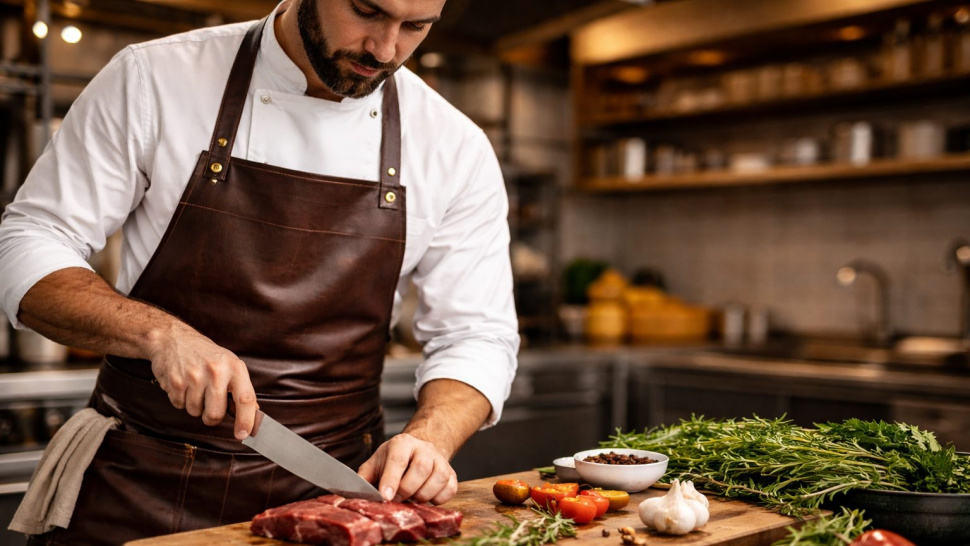

Most people buy a brown leather apron the way they buy a good pair of boots. They expect it to look right on day one, and they half expect it to look better later. Grillers and smokers make a great test case, because the apron lives next to grease, heat, smoke, and sun, which are exactly the things that change leather fastest.
So what really happens over a year? This guide walks through the timeline, explains what those grease marks mean, shows how different brown shades age, and separates healthy aging from real damage.
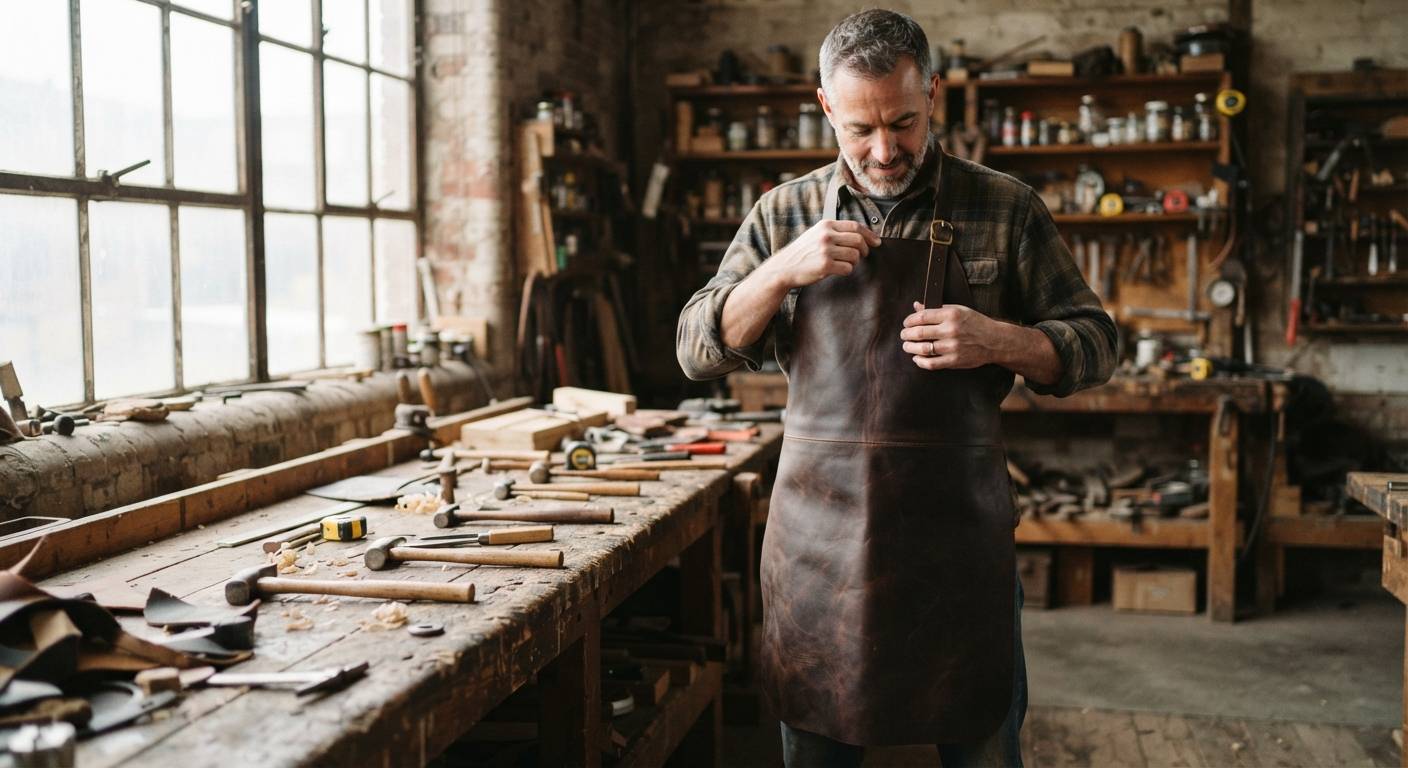
A brown leather apron darkens, softens, and picks up character during its first year. Grease and hand oils deepen the color, creases form where it bends, and high-contact areas develop a gentle sheen. Most of that is patina, not damage. Genuine full-grain leather ages this way, while bonded or heavily coated imitation leather tends to crack or peel instead. Wipe grease while it is fresh, condition lightly, and keep the apron away from direct heat and long sun exposure.
What Patina Actually Is
Patina is the slow change in color, texture and sheen that leather picks up as it is used. It comes from ordinary things: natural oils from your hands, light, air, moisture, friction and, for a grilling apron, a fair amount of cooking fat. The surface darkens, softens and develops a slight shine in the spots you touch most.
Two points matter before you buy.
- Not all leather ages the same way. Full-grain leather keeps the natural outer surface of the hide, so it shows the most change. Vegetable-tanned leather is known for the most dramatic patina, while chrome-tanned leather changes more subtly. A heavy pigment coating works like paint, which freezes the look in place.
- Imitation leather does not patina. Bonded leather and most PU “leather” tend to crack or peel as they age instead of developing character.
A Year in the Life of a Brown Leather Apron
This is a typical pattern, not a promise. Tanning, finish, climate and how often you cook all change the pace.
Week 1. The color is even and the leather feels firm, with some stiffness at the waist and straps. The apron is new and still holds its cut shape.
Month 1. The leather feels softer, with first creases at the waist and chest and a few grease spots. Flexing and body warmth start to relax the fibers.
Months 2–3. Darker patches appear where your hands wipe and where fat lands, and the edges darken slightly. Hand oils and cooking fat are absorbing into the surface.
Months 4–6. High-contact areas develop a subtle sheen and the color starts to even out. Regular wipe-downs blend the marks.
Months 7–12. The color turns warm and slightly uneven, creases become defined, and the apron clearly shows how you cook. This is the result of accumulated use, leaning, tool contact and light scuffs.
What Grilling and Smoking Do to Brown Leather
Grease. Splatter darkens the spot. Wipe the worst off while it is fresh and the mark tends to blend into the overall patina. Left to soak in, it leaves a darker patch that can look uneven for a while.
Smoke. Smoke mostly sits on the surface and airs out, so leather usually holds smoke odor less stubbornly than woven fabric.
Heat. Radiant heat from an open lid dries leather over time, and repeated exposure can stiffen it. Do not rest the apron near the grate.
Sun. Long afternoons in direct sun can dry and fade leather, especially along the shoulders and top edge.
Sauce and sugar. Sticky residue attracts dirt, so wipe it off once the apron cools.
Tools and friction. Tongs, probes and the edge of the cooker add scuffs and light scratches.
Moisture. Rain, wet hands and damp storage can cause spotting or mildew.
How Different Brown Shades Age
These are general tendencies. The finish on the leather matters as much as the color.
Light tan or natural. This shade darkens the most, so the contrast between new and old is strong. It tends to hide light dust but shows grease spots and water marks early on, until they even out.
Medium brown or cognac. It deepens steadily to a warm tone. It hides most everyday marks, though dark water spots and heavy scuffs can show.
Dark brown or espresso. The change over time is subtle. It hides grease and sauce well, but light scratches and pale residue can show.Distressed or worn-in brown. It already has variation, so new marks blend in and very little stands out.
Healthy Aging or Damage?
Normal patina looks like this:
- Even darkening and warm color
- A soft sheen where the leather is handled
- Creases at the waist and chest
- Grease spots that blend in
- Light scuffs and tool marks
- Slight edge darkening
Warning signs look like this:
- Deep cracks across the surface
- Dry, flaking, stiff areas
- White, green or fuzzy mildew spots
- A persistent sour smell
- Rust stains from wet hardware
- Loose stitching or stretched strap holes
How to Help It Age Well
- Use it. Natural hand oils are part of what builds a good patina.
- Wipe it after every cook. Once the apron cools, blot grease first and then use a soft damp cloth.
- Clean deeper now and then. Use a leather-safe cleaner, and test it on a hidden spot first.
- Condition lightly. A thin coat a few times a year keeps leather supple. Too much leaves a greasy film that attracts dirt.
- Skip harsh chemicals. Household degreasers, bleach, ammonia and solvents can strip or stain leather.
- Keep it away from heat and strong sun. Dry it naturally, never near a grill or vent.
Hang it up. Folding creates sharp creases that can crack over time.
Choosing a Brown Leather Apron That Will Age Well
Most of how an apron ages is decided before you buy it. Look for:
- Full-grain cowhide. It shows the most natural character.
- A finish that suits your taste. A lightly finished leather changes more visibly. A heavily coated one stays closer to how it looked new.
- A stated thickness. The 1.0–1.4 mm range (about 2.5–3.5 oz) is flexible enough to wear all afternoon and sturdy enough to last.
- Solid hardware. Brass ages with the leather, while thin plated hardware can flake and discolor.
- Reinforced stitching. Double stitching and rivets at the stress points keep the apron together while the leather changes.
- Adjustable straps. A good fit means less stress on any one spot.
A brown leather apron in full-grain cowhide with these traits is made to look better with use. Lapron, a US-focused maker of handmade leather aprons, builds its aprons from full-grain cowhide with solid brass hardware, adjustable straps and sizes from S to 2XL.
If You Mostly Use It at the Grill
Grilling is the fastest way to build character on an apron. If that is your plan, a bbq apron leather style built for the job makes the process easier. Look for:
- A chest-to-knee cut that protects your shirt and thighs from grease
- A towel loop so greasy hands stay off the apron
- A pocket for a probe thermometer, placed where you can reach it without leaning over the heat
- Cross-back straps for long cooks
Metal hardware positioned at the back, away from hot surfaces
Leather resists grease and radiant heat far better than cotton or synthetics, but it is not fireproof. Treat it as protection while you cook, not as a fire blanket, and keep it away from open flame.
Frequently Asked Questions
Does a brown leather apron darken over time?Yes, usually. Natural oils, light and use deepen the color, especially on full-grain leather. Heavily coated leather changes much less.Is grease a stain or part of the patina?
On full-grain leather, fresh grease that you wipe off tends to blend into the patina. Grease that sits and soaks in can leave a darker patch, which often evens out with use.
How long does it take to break in?
Most people feel the leather soften within a few weeks of regular use. The visible patina develops over months.
Can I speed up the patina?
The most reliable way is simply to use the apron and keep it lightly conditioned. Shortcuts, such as heavy oiling or harsh products, tend to leave a greasy film or damage the leather.
Will sun fade a brown leather apron?
Long direct sun can dry and fade leather. Store it indoors or in shade.
Does brown leather hide grill stains?
Medium and dark browns hide grease and sauce marks well. Light tan shows marks early but often evens out as it darkens.



Share the News