

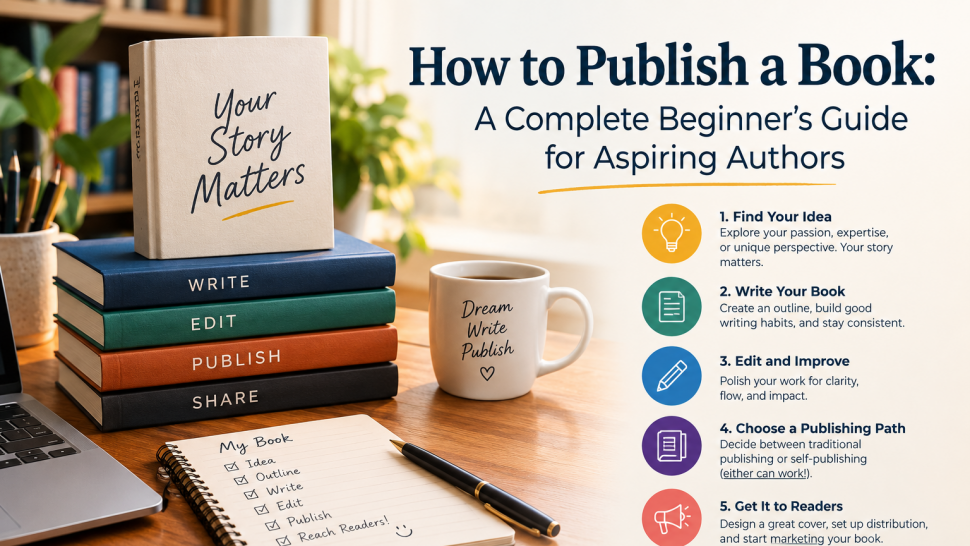

Not every meaningful story fits neatly into a publishing category. Some books explore overlooked communities, challenge familiar assumptions, or examine experiences that are difficult to reduce to a conventional commercial pitch. Others serve readers whose interests are specific but deeply felt. These books may struggle to attract attention through traditional publishing channels, yet they can offer perspectives that deserve a wider audience.
This is one reason indie books matter to the literary landscape. Independent publishing allows authors to pursue subjects, formats, and creative approaches that might otherwise face significant barriers. However, discussing independent books with depth requires more than claiming that they are more creative or authentic than traditionally published titles.
The more productive approach is to examine how publishing decisions shape stories, whose experiences receive attention, and what writers can learn from the independent model. Understanding these questions can help aspiring authors develop stronger manuscripts, identify their readers, and make informed publishing decisions.
What Are Indie Books, and Why Do They Matter?
Indie books generally refers to books published independently of major traditional publishing houses. The term can include self-published titles, books released through small independent presses, and projects produced with the help of professional freelancers or publishing services.
These arrangements are not identical. A small press may provide editorial guidance and production support, while a self-published author may manage the entire process or hire specialists for individual tasks. What connects many independent projects is the author's or publisher's greater control over creative and business decisions.
That flexibility matters because publishing is not simply a process of turning a manuscript into a book. It also involves deciding which stories receive investment, how they are presented, who their intended readers are, and how those readers can find them.
Publishing choices influence which stories reach readers
Traditional publishers often consider a manuscript's editorial strengths alongside commercial potential, market positioning, production costs, and distribution opportunities. These considerations are reasonable for businesses that invest resources in bringing books to market.
However, a manuscript can be worthwhile even when its audience is difficult to define in broad commercial terms. An independent author may be willing to serve a smaller readership because the subject matters to that community or because the writer sees an opportunity that a larger publisher has not pursued.
The distinction is not that traditional publishers ignore originality or that independent authors automatically produce more meaningful work. Rather, different publishing models can support different kinds of risk, audience development, and creative decision-making.
Why Indie Books Can Tell Stories Traditional Publishing Misses
Independent publishing can create room for stories that do not fit established expectations. Three areas are particularly worth examining: representation, subject matter, and creative structure.
1. Overlooked experiences and communities
A story does not need universal appeal to have cultural or personal significance. Books about a particular neighborhood, profession, immigrant experience, family history, or regional tradition may be especially valuable to readers who recognize their own lives in the material.
Consider a writer in Miami documenting the experiences of small-business owners who work across multiple languages and cultural communities. A broad business book might focus on familiar startup advice, while a more focused project could explore how family obligations, local relationships, and cultural expectations influence entrepreneurship.
The narrower subject is not necessarily a weakness. Its value depends on the quality of the reporting, storytelling, research, and insight.
Writers can apply this lesson by asking which experiences are missing from the books already available in their field. The goal should not be to manufacture an unusual subject but to investigate a genuine gap with care and specificity.
2. Subjects that resist easy categorization
Some manuscripts combine elements that publishers, booksellers, or readers usually associate with separate categories. A memoir might also examine workplace culture. A historical novel may explore contemporary questions through the past. A practical guide may draw on personal narrative to explain a professional lesson.
Independent publishing can give authors more flexibility to pursue such combinations, but creative freedom does not eliminate the need for clarity.
A writer must still help readers understand what kind of experience a book offers. If the subject crosses genres, the description, structure, and marketing materials should explain that combination rather than leave readers confused about what they are buying.
3. Creative decisions driven by the story
Traditional publishing can support experimentation, and independent publishing can produce conventional books. Nevertheless, an independent author may have more freedom to decide how a particular project should be structured, illustrated, released, or presented.
For example, a writer documenting a local community's history might combine personal interviews, photographs, archival material, and short narrative chapters. The format could help preserve the texture of the subject better than a conventional linear account.
The essential question is whether the creative choice serves the material. Innovation is valuable when it improves the reader's understanding or emotional connection, not merely because it makes a book look different.
How to Discuss Indie Books With Greater Depth
Writers, reviewers, and aspiring authors can move beyond broad claims about independent publishing by examining the decisions behind individual books.
Evaluate the story before the publishing label
A book's publishing route does not tell you whether the writing is effective. Assess the manuscript on its own merits.
Consider these questions:
Does the book have a clear purpose or central question?
Are its characters, arguments, or ideas developed convincingly?
Does the structure help readers follow the material?
Does the author provide enough evidence, context, or detail?
Does the book offer a perspective that adds something meaningful to the conversation?
This approach prevents two common assumptions: that independent books are automatically more authentic and that traditionally published books are automatically more polished.
A fair discussion recognizes that quality depends on the individual work and the decisions made during its development.
Examine the audience the book serves
A useful discussion also considers intended readership. A book written for specialists should not necessarily be judged by the same standards as a broad introductory guide. Likewise, a literary memoir may have different goals from a practical manual for entrepreneurs.
Ask who the book is trying to reach and whether it serves those readers effectively. A specialized book can be successful on its own terms if it offers depth, accuracy, or insight that its intended audience values.
Separate the author's intention from the reader's experience
Authors may intend to challenge assumptions, preserve a community's history, or explain a complicated issue. Those intentions matter, but readers experience the finished book rather than the author's plans.
When discussing a title, identify what the text actually accomplishes. Does it provide convincing examples? Does it represent its subjects fairly? Does it leave important questions unanswered? Does its argument become stronger or weaker as the book progresses?
These questions create a more useful conversation than simply praising a book for being independent.
Lessons Aspiring Authors Can Borrow
Independent publishing offers practical lessons even to writers who intend to pursue a literary agent or traditional publisher.
Define the book's purpose
Before drafting or revising, write a short statement explaining what the book is about, whom it serves, and why it needs to exist.
For fiction, this might describe the central conflict and emotional experience. For nonfiction, it could identify the reader's problem and the knowledge or perspective the book provides.
A clear purpose helps writers decide what belongs in the manuscript and what distracts from it.
Research the existing conversation
Finding a gap requires understanding what has already been published. Read comparable books, examine their strengths, and identify questions they leave unresolved.
Avoid assuming that a topic has been ignored simply because you have not encountered a book about it. Search library catalogs, bookseller listings, specialist publications, and relevant historical or professional resources.
The objective is to discover a meaningful contribution—not to claim that your book is the first of its kind without sufficient evidence.
Treat editorial work as part of the creative process
Creative independence should not mean working without feedback. Writers can benefit from developmental editing, subject-matter review, copyediting, and proofreading, depending on the manuscript's needs.
A developmental editor may identify a weak structure or an argument that arrives too late. A subject expert can help identify factual gaps. A copyeditor can improve consistency and clarity, while a proofreader checks the final text for remaining errors.
These services solve different problems. Authors should determine what the manuscript needs before spending money on professional support.
Make the book easy to understand and discover
A distinctive story still needs clear presentation. The title, cover, book description, categories, and author biography should communicate the work's identity consistently.
An author profile, for example, can explain the connection between the writer's background and the subject without becoming a lengthy personal history. Writers exploring how independent titles and author identities are presented can browse indie books for additional context on independent publishing and author positioning.
The principle is straightforward: readers should be able to understand why the book may interest them before committing time or money to it.
Common Mistakes to Avoid When Discussing Independent Publishing
A deeper conversation about indie publishing requires avoiding several oversimplifications.
Mistake 1: Treating independence as proof of quality. A book may have an original premise but still need substantial editing. Evaluate the finished work rather than assuming that creative control guarantees excellence.
Mistake 2: Treating commercial success as the only meaningful outcome. Sales matter to authors who want to earn income, but other goals may include preserving family history, serving a professional audience, or contributing to a cultural conversation. The right measure depends on the project's purpose.
Mistake 3: Assuming a small audience means a weak idea. A specialized subject can be valuable when the book addresses a genuine need. However, authors should still research demand and develop a realistic plan for reaching readers.
Mistake 4: Confusing creative freedom with a lack of responsibility. Authors remain responsible for accuracy, ethical representation, permissions where required, and the quality of the finished product. Independence does not remove these obligations.
Practical Tips for Authors Developing a Distinctive Book
Use the following checklist to turn these ideas into concrete action.
Identify the gap. Write down what existing books cover and what questions remain unanswered.
Define your reader. Describe the person most likely to value the book, including their interests and existing knowledge.
Explain your contribution. Complete the sentence: "This book adds value because..."
Test the concept. Discuss the idea with prospective readers, librarians, subject experts, or a writing group. Ask specific questions rather than simply requesting praise.
Strengthen the manuscript. Revise the structure, verify factual claims, and seek appropriate editorial feedback.
Choose a publishing route deliberately. Compare the creative control, professional support, financial responsibility, distribution options, and time commitments involved in self-publishing, working with an independent press, or pursuing traditional publication.
Set realistic expectations. Develop a practical plan for production, discoverability, and reader engagement without assuming that publication alone will create demand.
These steps can help authors build a stronger project before committing to a publishing strategy.
Frequently Asked Questions
Are indie books better than traditionally published books?
Neither model guarantees a better book. Independent publishing may offer greater control over creative and business decisions, while traditional publishers can provide editorial expertise, production resources, and established distribution relationships. The quality of an individual title depends on its writing, editing, research, presentation, and suitability for its intended audience.
Why do some stories struggle to find traditional publishers?
A manuscript may be difficult to position within existing categories, may serve a specialized audience, or may not fit a publisher's current editorial plans. These factors do not necessarily indicate poor quality. They reflect the practical decisions publishers make when selecting projects for investment.
How can a first-time author find an original book idea?
Begin with a subject you understand or are prepared to research carefully. Read existing books, speak with relevant people, and look for unanswered questions or underexplored perspectives. An original contribution does not require an entirely untouched subject; it can come from stronger evidence, a fresh interpretation, or a more useful approach.
Can independent authors produce professionally competitive books?
Yes. Independent authors can hire experienced editors, designers, formatters, and other publishing professionals. The challenge is coordinating these services, maintaining quality, and managing distribution and promotion. A realistic production plan helps authors make informed choices about which tasks to handle themselves and which to outsource.
How should readers evaluate an indie book?
Readers can use the same core standards they apply to any title: clarity, credibility, quality of writing, sound reasoning, and relevance to the subject. For nonfiction, examine the evidence and sources. For fiction, consider characterization, pacing, structure, and emotional coherence. The publishing label alone is not a reliable measure of quality.
Conclusion
Independent publishing creates opportunities for authors to pursue stories that may not fit conventional commercial expectations. Its significance, however, goes beyond creative freedom. It encourages writers to think carefully about audience, purpose, editorial quality, and the relationship between a book's form and its subject.
Discussing indie books with depth means looking beyond publishing labels and asking what a work contributes, how effectively it communicates, and whom it serves. Those questions help readers assess books fairly and help writers make stronger creative decisions.
Whether an author chooses self-publishing, an independent press, or traditional publication, the practical lesson remains the same: understand the story, respect the reader, and give the manuscript the attention it needs to become the best version of itself.



Share the News