
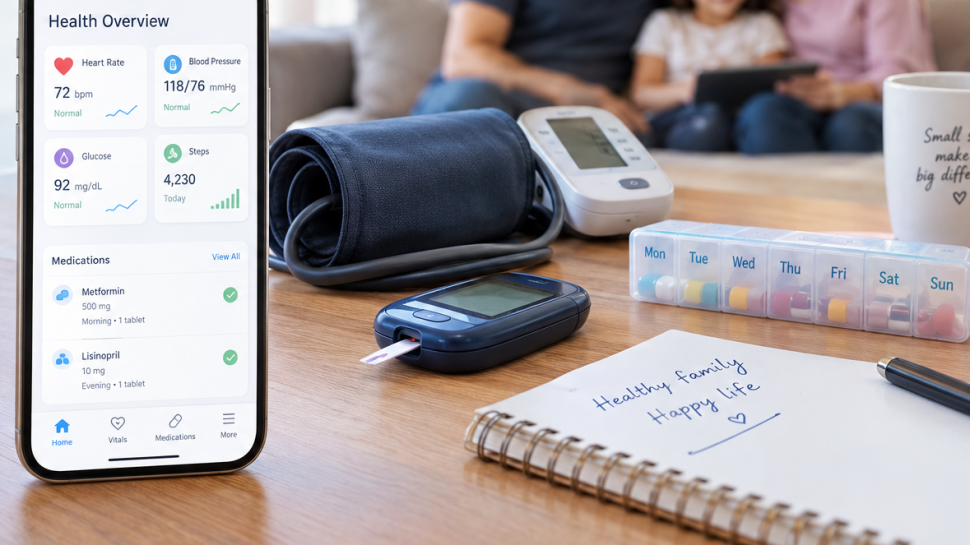

Taking care of your health does not always start in a doctor's office. Sometimes, it begins with checking your blood pressure in the morning, remembering to take medication after breakfast, or keeping track of a family member's glucose levels. These small habits can make a real difference over time, especially for people managing long-term health conditions.
Technology is making these routines easier to manage at home. Instead of relying on paper notes, scattered reminders, or memory alone, people can now use digital tools to keep their health information organized. A home health monitoring app can bring daily readings, medication schedules, and personal health records together in one convenient place.
The growing interest in home-based healthcare also reflects a simple need: people want to understand their health better without making everyday routines more complicated.
Why Home Health Monitoring Matters More Than Ever
Many health conditions require regular attention rather than occasional checkups. High blood pressure, diabetes, and other ongoing concerns may involve daily measurements, consistent medication, and regular communication with healthcare professionals.
However, remembering every reading and medication can become difficult when work, family responsibilities, and other commitments compete for attention.
A home health monitoring app gives people a practical way to record important information as part of their normal routine. Rather than trying to remember whether a reading was taken three days ago, they can review saved records whenever needed.
This information can also make conversations with healthcare providers more productive. A series of readings may help show patterns that a single measurement cannot reveal. Although an app cannot replace professional medical advice, organized records can help people explain their concerns more clearly.
Building a Consistent Health Routine
Consistency is often more useful than collecting a large amount of information all at once. Taking readings at appropriate times, recording them accurately, and following the advice of a healthcare professional can help create a clearer picture of personal health.
Digital records make this process easier because information stays accessible instead of getting lost among handwritten notes and old documents.
Making Blood Pressure Tracking Easier at Home
Blood pressure is one of the measurements many people need to monitor regularly. Those with hypertension may be asked by their healthcare provider to check it at home and keep a record of the results.
A blood pressure tracker app can help users save systolic and diastolic readings, record measurement dates, and review previous results. Over time, these records may help users notice changes and prepare useful information for medical appointments.
The key is to measure blood pressure correctly. People should use a suitable monitor, follow its instructions, and sit quietly before taking a reading. Recording measurements under consistent conditions can also make comparisons more meaningful.
Understanding Patterns Instead of Individual Numbers
One unusual reading does not always tell the whole story. Blood pressure can change because of stress, physical activity, caffeine, medication, and other factors.
Keeping a regular record helps put individual measurements into context. A blood pressure tracker app can make past readings easier to review, but users should avoid changing medication or treatment based on app records alone.
If readings are repeatedly outside the range recommended by a healthcare professional, it is important to seek appropriate medical guidance. Very high readings accompanied by symptoms such as chest pain, difficulty breathing, or sudden neurological changes require urgent medical attention.
Keeping Different Health Measurements in One Place
Some people need to monitor more than one aspect of their health. For example, someone living with diabetes and high blood pressure may need to record glucose readings alongside blood pressure measurements.
Using a glucose and blood pressure tracker can make these records easier to organize. Instead of checking several notebooks or switching between unrelated tools, users can keep important information together when the app supports both measurements.
A health vitals log app can also help users record other relevant information, depending on the features available. These records may include weight, pulse, symptoms, or notes about daily routines.
The benefit is not simply having more numbers available. It is being able to review information over time and share accurate records when discussing health concerns with a professional.
Choosing What to Record
Not everyone needs to monitor every possible measurement. The right approach depends on individual health needs and professional advice.
Some people may only need occasional blood pressure readings, while others may have a specific schedule for checking glucose or other vital signs. A useful track vital signs app should make it straightforward to record the information that matters without encouraging unnecessary monitoring.
Keeping records simple can make the habit easier to maintain. It also reduces the chance of becoming overwhelmed by information that does not support a clear healthcare goal.
Making Medication Management Less Stressful
Remembering medication is another everyday challenge, especially for people taking several prescriptions at different times.
A medication schedule app can help users organize doses, set reminders, and review their daily routines. Rather than relying entirely on memory, they can use notifications to support the schedule recommended by their healthcare provider.
Forgetting a dose can happen to anyone. A reminder system may reduce missed doses, although it cannot guarantee that medication is taken correctly. Users should always follow the instructions provided by their doctor or pharmacist.
Helping Families Manage Care Together
Medication management becomes more complicated when someone is also helping a parent, partner, child, or another relative. Different medicines may have different instructions, and prescriptions can change after appointments.
A pill reminder app for family can help caregivers organize medication routines for the people they support, provided the app includes suitable family-management features.
Being able to track medications for multiple people can be particularly helpful when a caregiver needs to distinguish between each person's prescriptions, dose times, and refill needs. Clear records can reduce confusion and make it easier to identify questions that need to be discussed with a pharmacist or healthcare professional.
Privacy matters here, too. Family members should have appropriate permission to access another person's health information, and sensitive records should be handled carefully.
Avoiding Last-Minute Prescription Refills
Running out of medication can disrupt an established routine. It may happen because a prescription was used sooner than expected, a refill date was overlooked, or a busy week caused someone to forget to contact the pharmacy.
A refill reminder app can help users keep track of prescription supplies and receive advance notifications when a refill may be needed. This gives them more time to contact their pharmacy or healthcare provider and resolve any prescription issues.
However, refill reminders work best when the information is kept up to date. Users should adjust their records when prescriptions change and confirm that a refill is available before relying on it.
For families managing several prescriptions, keeping refill information organized can also reduce unnecessary last-minute stress.
What to Look for in a Home Health App
Choosing a health app should be about practical needs rather than the number of features it offers. A complicated interface can make even simple tasks feel like extra work.
Look for an app that makes it easy to enter readings, review previous records, and set reminders where needed. If you manage several health measurements, check whether the app supports the specific information you need to record.
Privacy and security deserve equal attention. Read the app's privacy policy, understand how personal information is stored, and check whether its sharing options suit your circumstances.
It is also worth considering how the information will be used. A record is most helpful when it is accurate, understandable, and easy to share with the appropriate healthcare professional.
Technology Should Support Professional Care
Digital health tools are designed to support everyday health management, not replace doctors, pharmacists, or emergency services. An app may help organize readings and reminders, but it cannot independently confirm a diagnosis or determine whether a treatment should change.
Users should follow their healthcare provider's instructions and ask questions whenever a reading, symptom, or medication issue causes concern.
Making Small Changes That Last
Better health management does not require changing every habit overnight. It can begin with one simple action, such as recording blood pressure after breakfast or setting a reminder for an existing medication schedule.
Once that habit becomes familiar, users can add other routines if they need them. Over time, organized records may make it easier to prepare for appointments, notice changes, and remember important tasks.
For people looking for a more organized approach, MedKeep offers a starting point for exploring digital health tracking and medication management. The most useful tool is one that fits naturally into daily life and makes important information easier to manage.
Ultimately, home health monitoring is about making everyday care more manageable. With consistent habits, reliable records, and appropriate medical guidance, people can take a more active role in understanding their health while keeping their routines simple and practical.


Share the News