

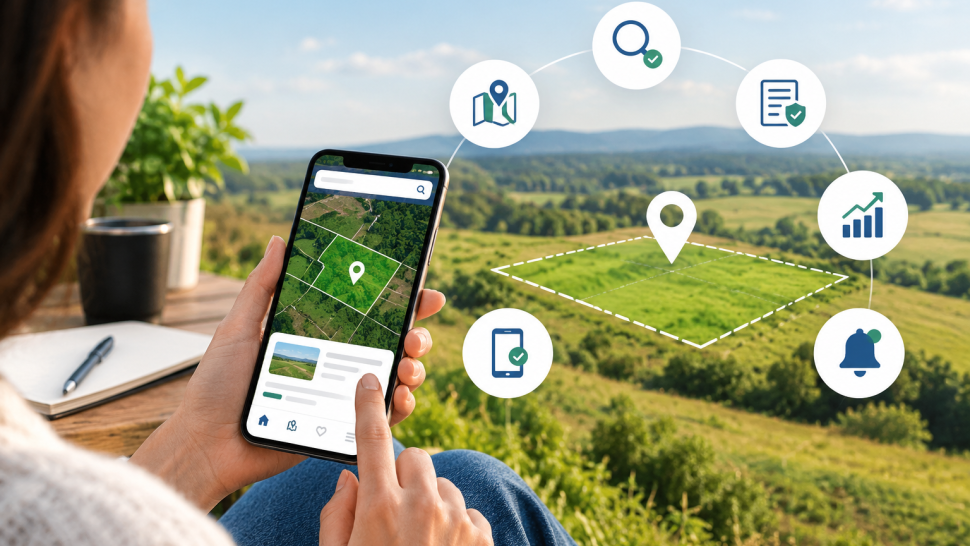

You want vacant lots without hopping between county sites, spreadsheets, and a separate map viewer. A land investing app puts parcel data, owner info, and due diligence in one screen so you can research, price, and contact faster. These seven checks show if an app can support real deal flow.
What A Good App Should Do
Land value turns on details; house tools are ignored. Two five-acre parcels can have different prices because one has legal road access and the other does not, or one sits in a floodway.
The right app answers three questions: where is market activity, what is this parcel like, and who owns it. If you need three subscriptions to answer those, the workflow breaks when you scale.
The 7 Features That Matter Most
1. Nationwide Parcel and Ownership Data in One Place
You need boundaries, acreage, APN, assessed value, owner name, and mailing address for any state you market in, updated daily. County sites lag.
Look for a platform that merges county assessor, recorder, and proprietary data so changes surface fast. One tap should return owner, acreage, and lot lines.
2. Land-Specific Filters, Not House Filters
House tools filter beds and baths. That says nothing about dirt. When you compare a find land parcels app, check for parcel native filters.
Look for road frontage range, slope percent, flood zone with FEMA overlay, wetlands, landlocked status, and a vacant land model that removes improved parcels using aerials.
3. Comparable Sales You Can Inspect
Automated values fail when comps are flawed. A family quitclaim, a $10 deed, or a sale that closed low due to no access can distort any model.
Pick an app with nationwide MLS for active and sold land and an estimate paired with the comps behind it. You should open each comp and decide if it fits.
4. Market Research Before List Building
Pricing before market selection burns the mail budget. You want layers that show where transactions already exist.
Heatmaps for sales volume, demand, price per acre, and days on market point you to counties with depth. Turnover helps you avoid areas with 15 sales per year. Find markets first, then build your list.
5. Portfolio Owner Search and Contact
A fast way to grow is to find owners holding multiple parcels that match your criteria. One owner with eight lots equals one conversation.
Search by owner name or geography with total parcel count and acreage per owner. Check for integrated skip tracing so you move from search to outreach in one place.
6. Mobile Scouting That Mirrors Desktop
Deals rarely wait for desk time. Your field workflow should carry the same data as your office setup.
On mobile you need to tap to view the owner and acreage, run comps and check flood and slope, save parcels with notes while driving, and share a report.
7. Clean Exports and Shareable Reports
Research only helps if you can act. Look for batch exports that include owner data and ready to mail lists, plus single parcel reports.
A useful report bundles boundaries, aerials, slope and flood visuals, comp tables, and owner details in one PDF. Avoid tools that charge per record for basic exports.
How To Test An App In 30 Minutes
Pick a county you know. Apply your buy box, open five parcels and inspect comps, toggle flood and access, search owners with three or more parcels, and export ten records. If you finish on a desktop and phone in under 30 minutes, it fits.
To Sum Up
Your first app should reduce steps, not create them. Focus on nationwide coverage, land-specific filters, transparent comps, market research, portfolio tools, mobile scouting, and exports you can use tomorrow. A focused land investing app that covers those points lets you spend time with sellers instead of stitching data.
If you want those layers in one place, Land Portal combines nationwide ownership data, AI land filters, MLS comps, market heatmaps, portfolio search with skip tracing, and a mobile app included with a subscription, all built for land investors.
FAQs
What Is The Cheapest Way To Find Parcels Without An App?
Use free county GIS viewers and assessor sites. You will visit each county separately and track owners by hand. That works for one lot but slows when you need a list.
How Accurate Are Property Lines in a Find Land Parcels App?
Apps show lines from county and GIS sources over aerials for screening. They help you judge size and access but are not a legal survey. Order a survey when exact boundaries matter.
Do I Need to Skip Tracing Inside My App?
You can start without it, but built-in contact data removes an extra vendor. When search and contact live together, you avoid mismatched files.
Can An App Tell Me If A Lot Is Buildable?
No app can give a final answer, since that depends on zoning, perc tests, setbacks, and utilities. A good app flags risks early, like flood zones, wetlands, and lack of frontage.
What Should I Check During A Free Trial?
Run one market end-to-end. Filter for your criteria, review comps for five parcels, run a portfolio search, save parcels on mobile, and export a list. If those steps feel clear, it likely fits.


Share the News