

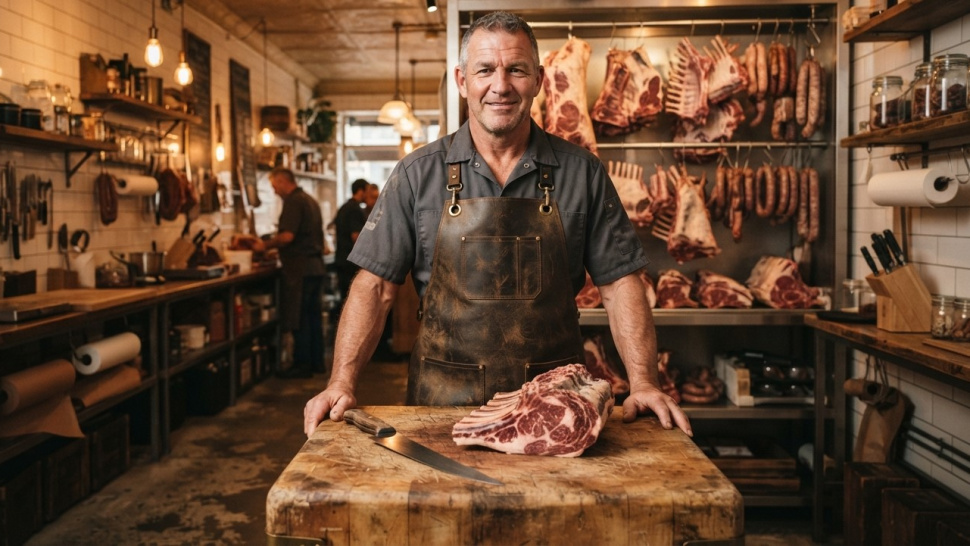

Blood, fat, and bone fragments don't care what you're wearing, and a long enough shift behind the block will test any apron's limits eventually. The honest answer to whether leather can keep a butcher clean and safe is: mostly yes, for different reasons than people usually assume, and it helps to know exactly which problem leather is actually solving.
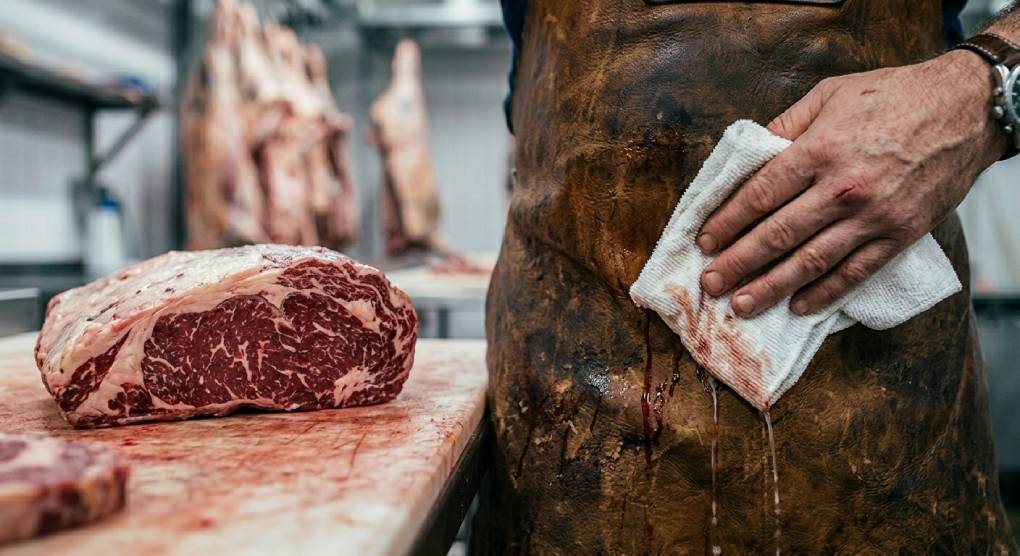
A well-oiled leather butcher apron works first as a barrier, not a shield. Its surface is close to non-porous, so blood, fat, and moisture bead and run off rather than soaking straight through to the clothing underneath — a meaningful difference in a job where the same apron gets splashed dozens of times a day. Liquids that would sit and stain a canvas apron for a full shift simply wipe off leather between tasks.
What Leather Doesn't Do
It's worth being direct about the limits here, because overselling protective gear is how people get hurt. Leather resists glancing contact, sparks, and splashes noticeably better than fabric, but it is not cut-proof and it is not armor. A slipping knife or a stubborn piece of bone can still get through a standard leather apron under enough force. Shops handling unusually heavy cleaver work or high cut-risk tasks often layer a dedicated cut-resistant apron underneath the leather one specifically because the two materials are solving different problems — one for hygiene and splash control, the other for blade resistance.
Why Hygiene Is the Bigger Daily Win
In food handling specifically, a surface that doesn't absorb contaminants matters as much as one that resists cuts, maybe more, since contamination control is a constant background requirement rather than an occasional risk. A non-porous leather apron that gets wiped down between tasks is doing real hygiene work every single time, not just during the rare moment a blade slips.
There's a temperature-regulation side to this too that doesn't get mentioned often. A full-coverage leather apron adds a mild insulating layer, which helps in both directions — a bit of a buffer in a cold-storage environment, and a layer that doesn't trap heat the way some synthetic coatings do during long stretches at room temperature. It's one more reason a basic leather apron shows up across so many different trades rather than staying confined to one.
So What Should You Actually Buy?
For general butchery and food prep, a full-coverage leather apron with reinforced stitching at the chest and waist covers the day-to-day hygiene and splash problem well. For heavy cleaver work, bone-in processing, or any task with a meaningfully higher cut risk, treat leather as the hygiene layer and add dedicated cut protection underneath rather than expecting one apron to solve both problems at once.



Share the News